Two persons, a mother and child were found dead along their farmland while five were gruesomely killed on August 20 at Alape village. The incidents almost led to a communal clash between the two communities, but for the prompt intervention of security operatives and the state government. However, one of the principal suspects arrested in connection with the killings, Shina Adeyemi, 35, disclosed that he killed a Modakeke woman recently to avenge the death of his three brothers and a sister that were killed by the Modakekes on their farmlands. According to him, what happens in the farmlands is like a war where farm owners on both sides are engaged in gun battles at different times with different types of casualties. He said his siblings were killed during different attacks by the Modakekes, adding each one was killed on the farmland.
Finally_the_Ospoly_Jungle_Thief_have_been_caught.
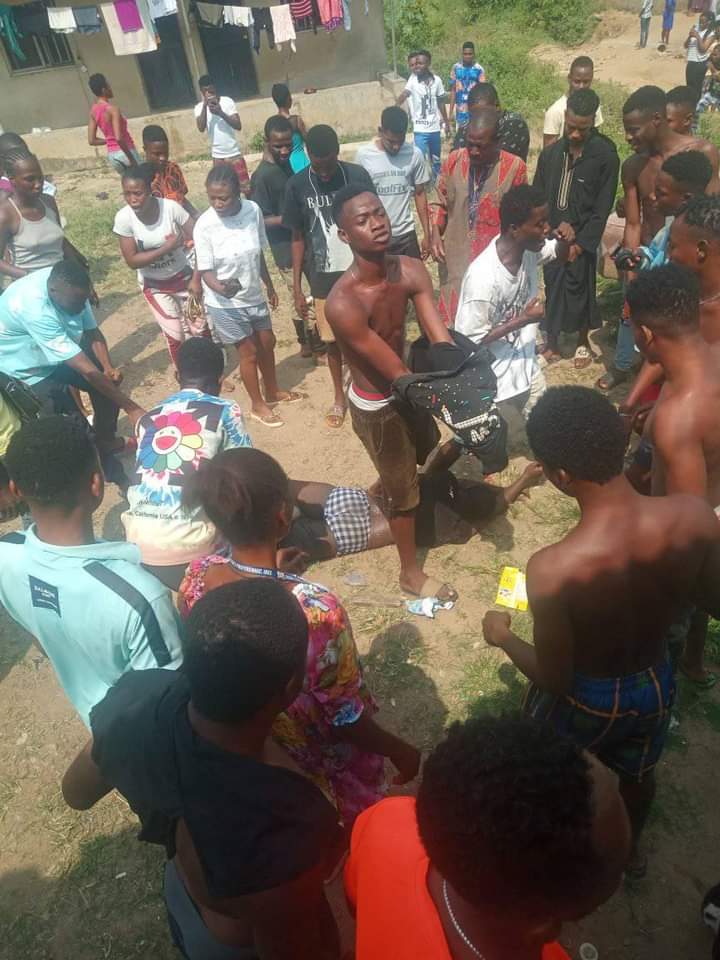
An un-identified young unknown gunman attack a single lady coming back from campus along Jungle Road, with two knives in his hand, he piece the the lady’s hand & try to ambush and kill her
But Unfortunately Two young men came to her rescue @ his Front & right behind him. He tried to escaped but the two guys overpowered him & Capture him. The guys also sustain a Minor injuries while bringing him down.✍️
Violence Against Women Act (VAWA), U.S. federal legislation that expanded the juridical tools to combat violence against women and provide protection to …Related Topics: property law procedural law inheritance constitutional law internatio. Other cultural factors include gender stereotypes and prejudice, normative expectations of femininity and masculinity, the socialization of gender, an understanding of the family sphere as private and under male authority, and a general acceptance of violence as part of the public sphere (e.g. street sexual harassment …
When a woman shares her story of violence, she takes the first step to breaking the cycle of abuse.
It’s on all of us to give her the safe space she needs to speak up and be heard.
It’s important to remember that when discussing cases of sexual violence, a victim’s sobriety, clothes, and sexuality are irrelevant.
The perpetrator is the sole reason for assault and must bear the responsibility alone. Call out victim-blaming and counter the idea that it’s on women to avoid situations that might be seen as “dangerous” by traditional standards.
Survivors of violence are speaking out more than ever before, and everyone has a role to play to ensure they can have justice.
Don’t say, “Why didn’t she leave?”
Do say: “We hear you. We believe you. We stand with you.”
Teach the next generation and learn from them
The examples we set for the younger generation shape the way they think about gender, respect and human rights. Start conversations about gender roles early on, and challenge the traditional features and characteristics assigned to men and women. Point out the stereotypes that children constantly encounter, whether in the media, on the street or at the school, and let them know that it’s OK to be different. Encourage a culture of acceptance.
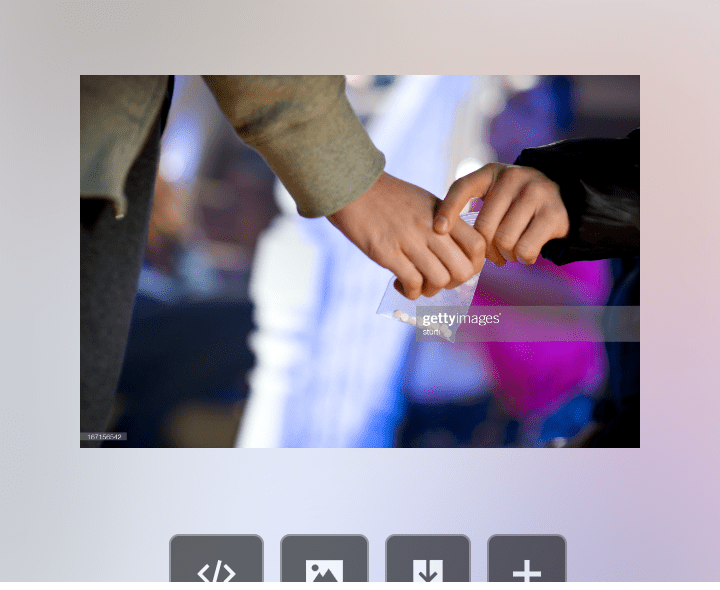
Drug abuse is a global health and social problem with distinct conditions and problems that vary locally [1]. The use of psychoactive substances among adolescents and youths has become a subject of public concern worldwide due to the fact that it contributes potentially to deliberate or un deliberate harm/injury [2,3]. Drug abuse, addictions and trafficking has a universal propaganda that transverse across socioeconomic, cultural, religious, and ethnic boundaries [4]. Despite the efforts of the Nigerian tiers of Government and the National Drug Law Enforcement Agency (NDLEA) to stem to its tide in Nigeria, there has been a consistent spate in the number of cases especially among adolescents (10-25 years of age) [5]. Experimentation with drugs during adolescence is common in Nigeria. At this age, they desire to explore many things due to several factors like: curiosity, peer pressure and to relieve stress. Using gateway drugs especially alcohol and tobacco due to early exposure increases the risk of using other hard drugs later. Some adolescents experiment and stop or continue to use occasionally without having negative complications. Others develop addiction that makes them move into more dangerous drugs and causing significant harm to themselves and possibly others: family and community (National Institute on Drug Abuse 2003).
CONCEPT OF DRUG ABUSE
The use of drugs for social rather than prescribed medical reasons has been well documented [8,9]. A comparison with other third world countries reveals that Nigeria ranks among the highest users of dangerous drugs such as alcohol, tobacco, cannabis, benzodiazepines, cocaine and opioids [10]. A review of the literature clearly indicates that there has been a steady increase in the prevalence of drug use and its associated consequences within the last three decades [11-13]. Almost all types of psychoactive substances are available in Nigeria due to their spill over into the streets from drug traffickers who use Nigeria as a conduit to transport drugs from South East-Asia (the Golden Triangle) and South America (Boliva, Peru, and Brazil) to Europe and North America [14].
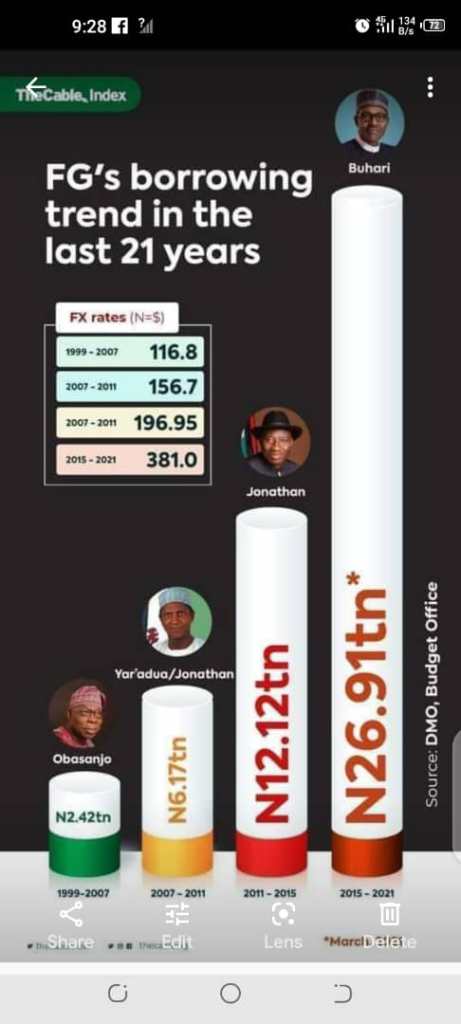
Nigeria’s public debt has been on the rise. Despite securing debt relief during the Olusegun Obasanjo-led administration, successive governments have continued on a borrowing spree — the federal government’s component of the public debt surging 658 percent to N26.9 trillion in the last 21 years.Advertisement
Federal Government External loans rise 366% since 2015. Nigeria’s external loan stock is set to hit an all time high of $45 billion, following President Muhammadu Buhari’s request for fresh external borrowing to the tune of $4.054 billion from the Senate yesterday.
The proposed addition to the debt stock indicates that external borrowings have skyrocketed the nation’s foreign debt portfolio by 366 per cent since 2015 when the total outstanding foreign debt was $9.7 billion. This comes against a huge decline in actual revenue over a six year period with 2020 recording N3.4 trillion, about 37 per cent decline against N5.43 trillion recorded in 2015. Also, approval of the new request will bring the total approved foreign borrowings in 2021 alone to $12.3 billion.Buhari in the letter dated August 24, 2021 and read during plenary yesterday by President of the Senate, Senator Ahmad Lawan, is asking for external borrowing of $4.054bn, €710m, $125m in addendum to the 2018-2020 borrowing plan.
Federal Government Borrowing Trend in the last 21years
The letter explained that the projects listed in the 2018-2021 Federal Government Borrowing Plan are to be financed through sovereign loans from the World Bank, French Development Agency, AFD, China Exim-Bank, International Fund for Agricultural Development, IFAD, Credit Suisse Group and Standard Chatered/China Export and Credit (SINOSURE) in the total sum of USD4,054,476,863.00; Euro 710,000,000.00 and Grant Component of USD125,000,000.00. “However, in view of other emerging needs and to ensure that all critical projects approved by FEC as at June 2021 are incorporated, I hereby forward and addendum to the proposed Borrowing Plan. In a statement signed by the spokesman, Kola Ologbondiyan, the party lamented that with the N33.107 trillion debt already accumulated by President Buhari and the APC “with nothing to show but decayed infrastructure and a depressed economy, an addition N5.62 trillion borrowing proposed by Buhari for the 2022 budget and now a fresh N2.66 trillion external loan, the APC will be hanging over N40 trillion debt on the nation, with no clear-cut repayment plan.”
The first act of kidnapping in Nigeria started 2006 when the militants of the Niger Delta took total hostage to protest the inequality in the region. According to the militants, Nigeria is built at the expense of the region which serves as the cash cow for the whole country.
Kidnapping rate in Nigeria. Dec 01 2021 Since April 2014 after the Boko Haram terrorists abducted 276 schoolgirls from their dormitories in Chibok, Borno State, mass kidnapping for ransom has gradually, become the other of the day in Nigeria. by Sunday Vanguard show that the country has witnessed staggering 111 kidnapping incidents in the last eight months, that is, from January to mid-August, 2021. The total figure represents confirmed cases by the police and eye witnesses’ accounts eventually reported by the media. Sunday Vanguard learned that many other unreported incidents may have taken place, especially in Niger, Zamfara, Sokoto, and Katsina states (North-West and North-Central) where banditry is raging. Thus, the sum total may well be above 111 if all cases were captured. The highest number of kidnap cases (27), was recorded in February with 605 victims. This was closely followed by July (23) and January (21) with 327 and 284 victims respectively.
The first act of kidnapping in Nigeria started 2006 when the militants of the Niger Delta took total hostage to protest the inequality in the region. According to the militants, Nigeria is built at the expense of the region which serves as the cash cow for the whole country.
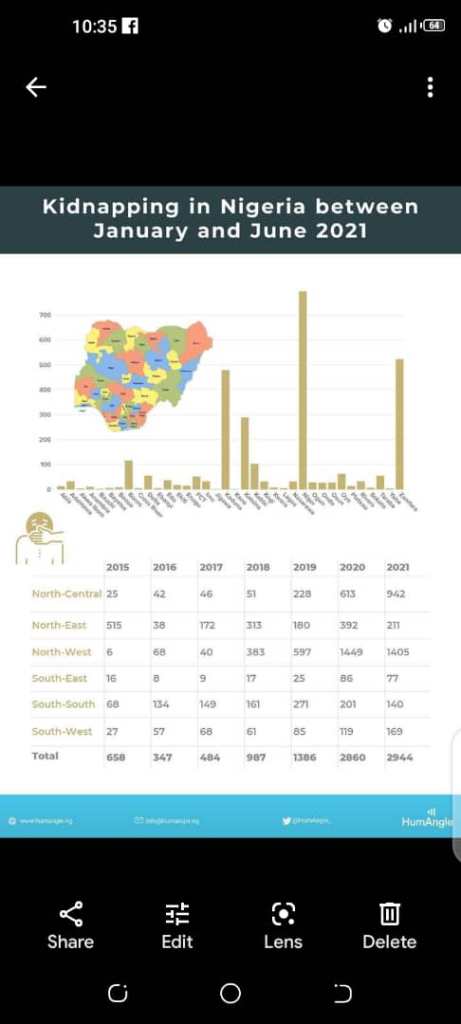
Over 2,371 persons were abducted between January and June 2021, a report by SBM Intelligence has said. According to the report, an average of 13 persons were abducted daily within the period across the 36 states of the federation and the Federal Capital Territory. The study revealed that kidnapping has become perhaps the biggest security threat in the country. Between January 2015 and May 2020, no fewer than 4,962 persons were kidnapped across the country. Many cases are not reported to the police or by the media.
The study`s findings through descriptive and historical method shows that abject poverty, corruption and fraud, political influence, joblessness, terrorism, lack of capital punishment by the government, the changing value system and quick-money syndrome are the major causes of kidnapping in Nigeria.
INSECURITY: TOP 12 STATES WITH MOST KIDNAPPEES IN 6 MONTHS – Jan to Jun 2021
The situation was made worse due to alleged breakdown of security architecture in the country especially in the North-West and North-East. Security experts say the inability of the Federal Government, through the security agencies, to stem the development has led to a surge in kidnapping and banditry. According to the experts, armed bandits have taken advantage of weak security presence to continue their reign of terror on schools, villages and highways. SBM Intelligence According to a report by SBM Intelligence, an average of 13 persons were abducted daily in Nigeria in the first half of 2021, thereby underscoring how common and daring the criminals have become. The findings, which covered Nigeria’s six geopolitical zones, South-West, South -East, South-South, North-Central, North-East and North-West, and the Federal Capital Territory, FCT, Abuja, represent the reported cases. The pattern of abduction remained the same in the North, where victims were often kidnapped en mass during attacks on remote villages and schools. Mass abduction of travellers on highways emerged as the latest mode of operation by gunmen who have become more daring. This is not prevalent in the North alone as highways in the South-West and South-South have become hot spots of the dangerous roads identified include Benin-Ore Highway, Benin-Auchi-Okene Highway, Keffi-Akwanga Highway, Akure-Owo Expressway, Abuja-Abaji-Lokoja Road, Zaria-Sokoto-Gusau,Bauchi-Tafawa-Balewa Highway, Wukari-Takum Road and Minna -Kotongora Road. In the South-West where herdsmen have been accused of most of the incidents, victims were often abducted on highways and farms. Clear strategy Sunday Vanguard notes that after each mass abduction, state and federal governments condemn the attack in strong terms, with promises to rescue abductees. Without any clear strategy for arresting the scourge, which has spread to every part of the country, authorities and individuals pay huge sums to kidnappers.
,In Nigeria, there are large gender disparity between the education that which boys and girls receive. Many girls do not have access to adequate education past a certain age. In 2010, the female adult literacy rate (ages 15 and above) for Nigeria was 59.4% in comparison to the male adult literacy rate of 74.4%.as in most African countries, girls’ school attendance is low, as records have shown that fewer girls go to school than boys. Despite the provisions of the Universal Basic Education Act and the Child Rights Act …
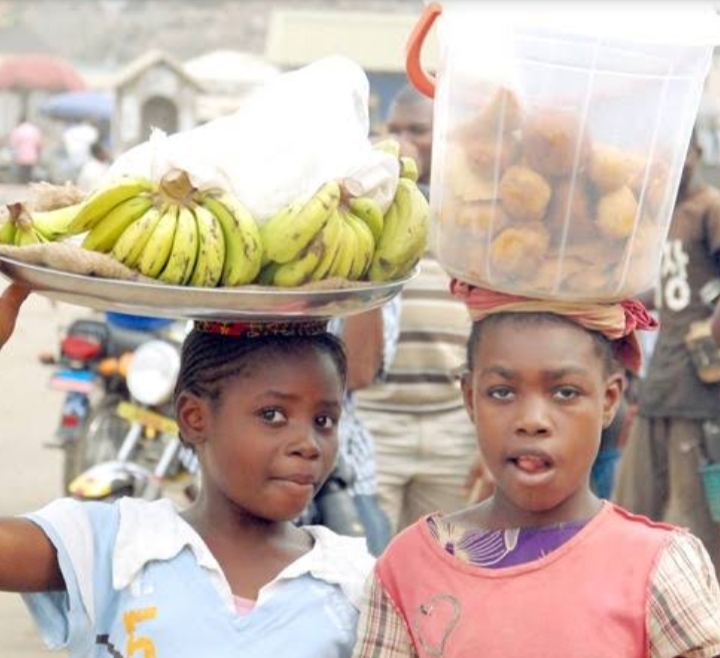
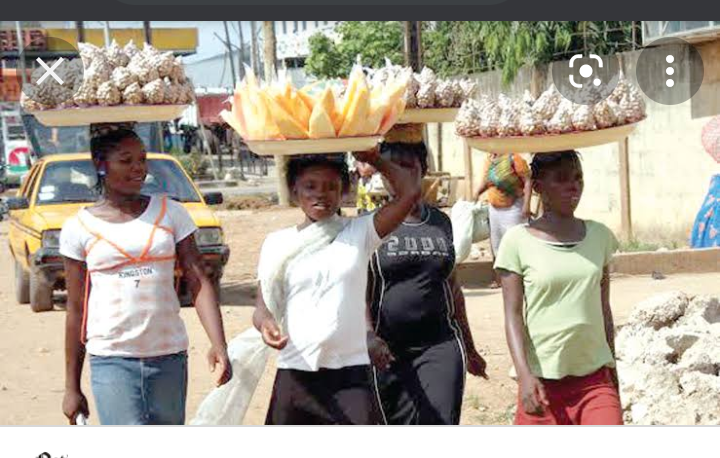
Picture of girls child hawking
Many factors were examined. The result of the findings revealed that those factors such as Peer in fluence, quest for money and material things, unfriendly situation of school , effect of social media, low level of understanding of sex education and violence against girls are responsible for poor enrolment or high level of out of school girl in schools. Based on the findings, some recommendations were made among which are: there is need for effective policy by governments enacting the laws that can protect the dignity of the girl child in the society. There is need for quality assuring standard of educa tion by ministry of education. This is to monitor the number of girl child in school and find out why any of them fails to come. Governments should develop school curriculum that will involve sex education. This will help the students or adolescents to bui ld positive self – esteem and body image.






 Site Title